Mastering Your Mental Landscape with DE-STRESS JOURNAL Canva Templates
In the modern era, the concept of stress has transcended simple nervousness; it has become a pervasive element of daily life that affects physical health, professional productivity, and personal relationships. While the causes of stress are often external—deadlines, financial pressures, or family obligations—the management of that stress is an internal skill that must be cultivated. For many, the act of writing serves as a powerful release valve, allowing chaotic thoughts to be organized into manageable data. However, the blank page can sometimes feel intimidating. This is where the utility of structured journaling comes into play, specifically through the use of comprehensive tools like the DE-STRESS JOURNAL Canva Templates. These templates provide a scaffold for emotional regulation, offering a guided pathway from anxiety to acceptance.
The Architecture of Anxiety: Understanding the Need for Structure
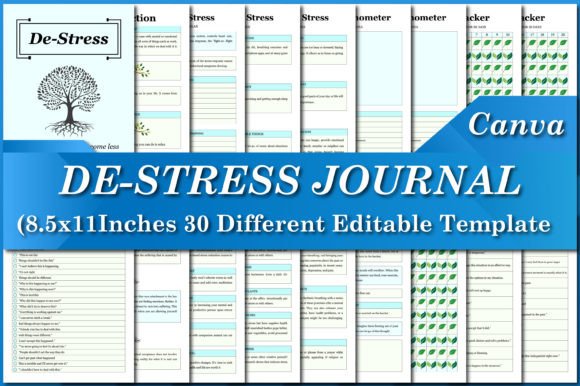
Before diving into the mechanics of journaling, it is essential to understand why unstructured self-reflection often fails. When a person is overwhelmed, their executive functioning—the part of the brain responsible for planning and organizing—shuts down. In this state, staring at a blank notebook can feel like staring into an abyss. The DE-STRESS JOURNAL Canva Templates solve this by providing an "architecture" for anxiety. By offering specific sections such as the Introduction, Effects of Stress, and Preventing Stress, the templates remove the cognitive load of deciding what to write. Instead, the user simply follows the prompts.
This structured approach is not just about organization; it is about validation. When a user opens a template that includes a Stress Thermometer or a Stress Tracker, they are given permission to quantify their feelings. Stress often feels abstract and all-consuming. However, by marking a level on a thermometer, the user turns an abstract emotion into a concrete metric. This externalization of emotion is a therapeutic technique that helps separate the self from the stressor.
Practical Application: From Digital Editing to Physical Print
One of the most significant advantages of this system is the bridge it builds between digital convenience and the tactile experience of writing. The DE-STRESS JOURNAL Canva Templates are designed with a dual-purpose workflow. Users receive an editable Canva link, which allows for total customization. A user might want to change the color palette to match their aesthetic, or perhaps alter the font to something that feels more personal. This ability to edit ensures that the journal feels like a personal artifact rather than a generic workbook.
Once the design is finalized, the transition to physical media is seamless. The files are optimized to provide a print ready PDF file at the user's convenience. For those looking to keep a physical record, the templates are formatted at Size 8.5×11 with Bleed. This standard US Letter size ensures that the journal can be printed at home or at a local print shop without scaling issues. The inclusion of bleed marks is a technical detail that ensures images and backgrounds extend to the very edge of the paper, providing a professional, polished look that is satisfying to hold and use.
Key Components for Emotional Regulation
The efficacy of the DE-STRESS JOURNAL lies in its specific components designed to target different aspects of mental health. It is not merely a diary; it is a toolkit.
- Calming Techniques & Coping With Stress: These sections move beyond identification of problems and focus on solutions. They serve as a reference guide during high-pressure moments, reminding the user of grounding exercises they might forget when their cortisol levels are high.
- Radical Acceptance: Borrowed from Dialectical Behavior Therapy (DBT), this concept is central to the journal. It encourages users to stop fighting reality and instead accept it without judgment. By dedicating pages to Radical Acceptance, the journal helps users practice the mental shift required to stop suffering over things they cannot control.
- Mindfulness & The Five Senses: Anxiety often pulls the mind into the future. These sections anchor the user in the present moment. By prompting the user to list things they can see, hear, smell, touch, and taste, the journal forces a physiological pause, engaging the parasympathetic nervous system to lower heart rate.
- Checklist & To Do List: Stress is often exacerbated by a feeling of being overwhelmed by tasks. Including a dedicated To Do List within the journal allows the user to offload these thoughts, creating a clear plan of action that reduces the mental burden of remembering everything.
Technical Specifications for Creators and Sellers
While the primary user of this product is someone seeking personal relief, the DE-STRESS JOURNAL Canva Templates also serve a secondary audience: creators, designers, and business owners. The templates are engineered to be tested on Amazon KDP (Kindle Direct Publishing). This is a critical feature for entrepreneurs in the low-content book market.
The technical integrity of the product is robust. With 300 DPI (dots per inch) resolution, the graphics remain crisp and clear, avoiding the pixelation that plagues many DIY printables. Furthermore, the color mode is set to CMYK, which is the standard for professional printing. This ensures that the colors seen on the screen match the ink on the paper—a common pain point for those unfamiliar with print production. The package includes 30 Pages of content, providing substantial value, and is formatted with No Bleed options as well, depending on the specific printing requirements, though the primary setup accommodates standard bleed necessities.
Integrating the Journal into Daily Life
The true test of any self-help tool is its integration into daily life. A journal that is too complex will be abandoned; one that is too simple will be ineffective. The DE-STRESS JOURNAL strikes a balance. It is designed to be used in short bursts or long sessions. A user might spend five minutes in the morning filling out the Checklist to set intentions, or thirty minutes in the evening working through the Effects of Stress to process the day's events.
For educators and therapists, these templates can serve as supplementary materials. A teacher might use the Mindfulness pages as a classroom activity to help students focus before an exam. A business owner might use the Radical Acceptance framework to process a professional setback. The versatility of the editable Canva link means that professionals can adapt the content to suit their specific niche, whether that is corporate wellness, educational resources, or personal development products.
The Aesthetic of Healing
We cannot ignore the psychological impact of aesthetics. A beautiful object invites interaction. The High quality design of these templates ensures that the user enjoys the visual experience of their healing journey. The layout is clean, allowing for ample writing space, while the design elements are supportive rather than distracting. When a user downloads the print ready PDF file, they are not just getting a worksheet; they are getting a piece of design that respects their time and mental state.
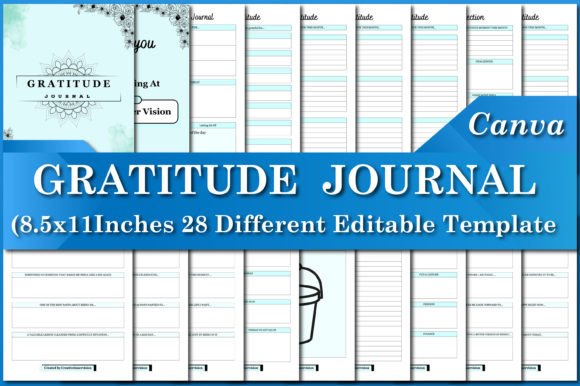
Furthermore, the gratitude expressed by the creator of these templates underscores the community aspect of this product. The note regarding the user's presence and support highlights that this is more than a transaction; it is an invitation to join an "artistic journey." This human element is often lost in digital products, but it remains a vital part of the healing process. Knowing that a real person designed these pages with care adds a layer of comfort to the user experience.
Conclusion: A Tool for Modern Resilience
In summary, the DE-STRESS JOURNAL Canva Templates offer a multifaceted approach to mental wellness. They combine the psychological benefits of structured journaling with the practical benefits of modern digital design. Whether you are an individual seeking a way to manage the daily grind, or a creator looking for a high-quality product to offer your audience, these templates provide a comprehensive solution. By moving from the abstract concept of "stress" to the concrete actions of "tracking," "accepting," and "coping," users can reclaim their peace of mind. The journey from anxiety to acceptance is not linear, but with the right tools, it is entirely possible.